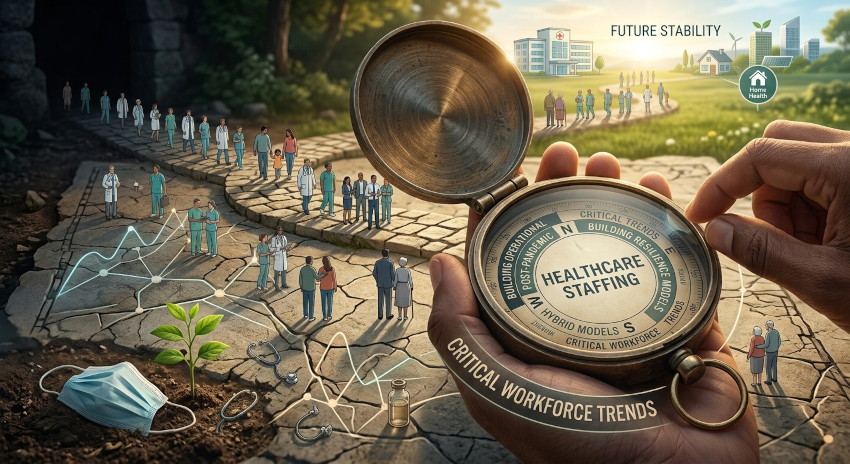
Building operational resilience requires looking beyond quick fixes. A macro-level examination of today's clinical market shows that traditional recruitment methods alone cannot solve systemic staffing shortages. Health systems must adopt strategic, multi-layered workforce models that integrate flexible staffing infrastructure into their long-term operational plans.
Macro-Level Drivers Shaping the Clinical Labor Force
Understanding the current landscape requires analyzing the structural forces driving shift patterns, vacancy rates, and clinical burnout across the country.
Demographic Pressures and Expanding Care Needs
The American population is aging at a rate unprecedented in modern history. As tens of millions of baby boomers reach senior age, the demand for complex, continuous medical care is accelerating. This demographic wave creates a double pressure: older adults require more frequent medical interventions and long-term support, while a large percentage of experienced clinicians belong to this same demographic cohort and are retiring from practice.
This imbalance expands beyond acute hospital settings. Extended care, assisted living facilities, specialized rehabilitation units, and home-based clinical services all require high volumes of qualified nurses and therapists to manage chronic health conditions safely.
Accelerated Clinician Early Retirement and Career Transitions
Years of sustained clinical intensity have accelerated career departures across nursing, therapy, and allied health disciplines. Burnout is no longer an isolated HR issue; it is a major operational risk factor. According to data published by the U.S. Chamber of Commerce, the healthcare and social assistance sector lost over 600,000 workers due to structural turnover and early retirement pressures during recent labor shifts, leaving millions of essential positions unfilled nationwide.
Experienced clinicians are opting for early retirement, transitioning to administrative roles, or leaving direct patient care entirely. This departure leads to a double loss: health systems lose critical floor coverage and forfeit institutional knowledge, preceptorship capabilities, and bedside mentorship that keep clinical teams strong.
The Shift Toward Flexible Work Environments
The modern clinical workforce views flexibility as an essential job condition rather than an optional perk. The rigid, mandatory scheduling models of the past are contributing directly to voluntary resignations. Nurses, physical therapists, occupational therapists, and allied health staff are seeking control over their shift patterns, geographical assignments, and balance between work and personal life.
Clinicians are increasingly choosing supplemental staffing roles, per diem coverage, and targeted short-term contracts. This flexibility allows healthcare workers to stay active in clinical practice on their own terms, reducing fatigue while maintaining their skills and professional independence.
Key Healthcare Staffing Trends Redefining System Operations
As health systems adjust to these structural market conditions, clear strategic patterns are reshaping how clinical labor is sourced, deployed, and retained across the country.
Moving from Emergency Reaction to Strategic Infrastructure
In prior years, temporary workforce utilization was treated as an emergency stopgap to cover sudden leaves of absence or unexpected census spikes. Today, forward-thinking health organizations treat supplemental clinical talent as a core component of their ongoing workforce model.
Integrating flexible clinical teams allows administrators to adjust capacity to match patient volume without overburdening permanent staff with mandatory overtime. This approach protects existing teams from exhaustion, controls premium labor expenses, and helps maintain continuous care across every unit.
Through customizable programs like the Interim HealthCare medical staffing solutions, health systems can access pre-vetted Registered Nurses (RNs), Licensed Practical Nurses (LPNs), Certified Nursing Assistants (CNAs), and allied health professionals tailored to specific operational demands.
Balancing Local Talent Sourcing with Agility
While national travel placement fills specific regional gaps, health systems are focusing more on local talent pools to build workforce stability. Local clinicians understand regional care practices, adapt quickly to community healthcare environments, and integrate smoothly into existing facility cultures.
Tapping into regional staffing networks provides rapid response support for single-day coverage gaps, long-term leaves, or seasonal census increases. Leveraging localized coverage allows healthcare leadership to maintain stability without relying solely on high-cost distance hires.
Prioritizing Rigorous Credentialing and Compliance
The rise of flexible labor models highlights the need for thorough clinical credentialing and regulatory compliance. Facilities cannot compromise on clinical standards, license verifications, or background checks when expanding their staff.
Leading health systems rely on trusted health care staffing agency partners that manage primary source license verifications, drug screenings, skill evaluations, and background checks. Delegating complex credentialing to specialists allows internal human resource and nursing administration teams to focus on patient care and internal staff engagement.
Predictions for the Future of Healthcare Staffing
Looking ahead, several key predictions indicate how health systems, outpatient networks, and residential care providers will structure their human capital management strategies.
Growth of the Hybrid Workforce Architecture
The future of healthcare staffing relies on a blended operational model. Successful health systems will structure their teams with a core group of permanent employees supported by a planned tier of flexible, per diem, and contract professionals.
This hybrid structure provides a financial and operational buffer against unpredictable patient numbers. By adjusting staffing up or down based on real-time need, healthcare operations can avoid understaffing during peak demand and avoid overstaffing when patient volume declines.
Integration Across the Care Continuum
Clinical care is continually shifting away from acute hospital stays toward outpatient clinics, post-acute care centers, and home health services. Healthcare staffing strategy must reflect this shift by building adaptable talent pipelines across every care environment.
Staffing support needs to move fluidly across diverse clinical settings, including:
Acute care hospitals and emergency departments
Skilled nursing and assisted living communities
Rehabilitation centers and outpatient therapy clinics
Educational institutions and public health settings
Home health care programs and personalized home care support
Establishing cross-continuum staffing pipelines ensures that patients receive consistent care as they transition from hospital settings back to their homes and communities.
Increased Focus on Clinician Well-being and Retention
Over the next decade, workforce strategy will focus heavily on clinician retention and health. Institutions that ignore workload management, nurse-to-patient ratios, and scheduling balance will face high turnover rates and growing financial strain.
By offering flexible schedule options and bringing in supportive temporary staff, health systems can protect their core teams from overload. Preventing fatigue helps facilities lower costly turnover, improve retention rates, and maintain consistent quality of care.
Positioning Staffing Solutions as Long-Term Infrastructure
Navigating today's clinical workforce landscape requires moving past temporary staffing fixes and building a resilient, long-term strategy. The ongoing changes in the healthcare staffing industry call for a fresh approach to workforce planning—one that views strategic staffing as an essential asset for operational strength.
Healthcare facilities need a dedicated partner that understands local labor trends while delivering national resources and strict compliance standards. Partnering with experienced providers helps healthcare systems overcome labor shortages, protect existing teams from burnout, and maintain high standards of patient care.
To learn how customized clinical coverage can strengthen your operational strategy, explore Interim HealthCare flexible healthcare staffing solutions and connect with a local medical staffing partner today.