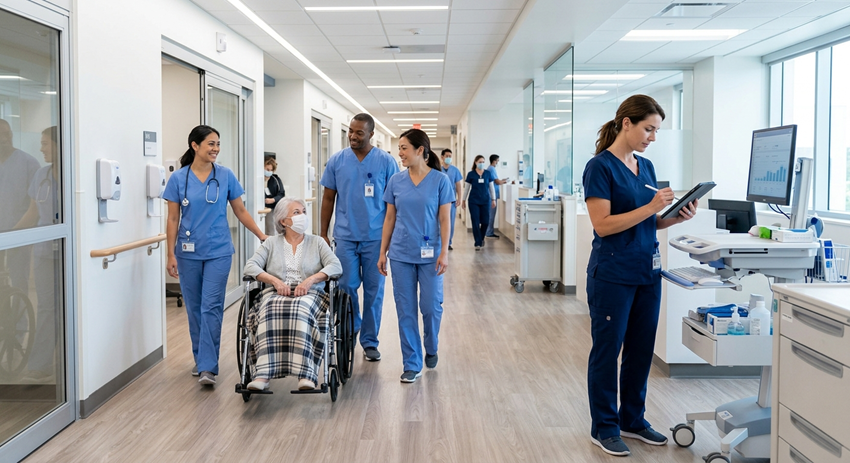
Agile healthcare staffing addresses this challenge by providing rapidly deployable, pre-vetted contingent clinicians. Rather than waiting weeks to onboard new staff, healthcare facilities leverage agile staffing partners to fill critical shift gaps within hours. This dynamic workforce strategy ensures continuous operational coverage, keeping patient safety and staff morale high even during severe staffing shortages.
The Direct Link Between Staffing Ratios and Clinical Outcomes
Decades of healthcare research confirm a clear relationship between clinician workloads and patient safety metrics. When nurses and clinical aides manage excessive patient loads, their ability to maintain vigilant surveillance drops. Critical details can easily slip through the cracks when a provider is stretched thin across too many beds.
Data shows that adding just one extra patient to a nurse's average workload significantly increases clinical risk. Studies indicate that each additional patient added to a nurse's workload is associated with a 7 to 16 percent increase in the likelihood of 30-day patient mortality, alongside higher rates of readmission and extended lengths of stay. Conversely, maintaining optimal staffing levels directly correlates with reduced hospital-acquired infections, faster intervention times during sudden clinical declines, and lower overall mortality rates.
Maintaining healthcare staffing quality requires continuous alignment between patient acuity levels and physical staff on the floor. By using agile staffing solutions to preserve appropriate ratios, healthcare organizations establish a protective barrier against avoidable adverse events.
Key Safety Metrics Improved by Contingent Staffing
Deploying qualified temporary clinicians directly influences the primary clinical metrics that healthcare facilities track every day.
Reducing Inpatient Fall Rates
Patient falls represent one of the most common and preventable adverse events in hospitals and senior care facilities. High fall rates often point to delayed call-bell response times caused by understaffed units. When patients wait too long for assistance to reach the restroom, they frequently attempt to transfer unassisted.
Fast-access contingent staffing maintains adequate floor coverage so caregivers can respond promptly to patient alerts. Staff who have time to perform routine safety checks, assist with mobility, and monitor high-risk individuals dramatically reduce unassisted fall incidents.
Lowering Medication Administration Errors
Medication errors represent a major risk in high-stress healthcare environments. Distractions, rushed workflows, and physical fatigue contribute directly to improper dosages, wrong-time administrations, and missed medication checks.
A healthy staff-to-patient ratio gives nurses the necessary focus to perform essential safety checks, such as cross-referencing patient records and double-checking complex drug dosages. By utilizing contingent nurses to offset heavy workloads, facilities minimize cognitive burnout and protect the integrity of their medication administration protocols.
Preventing Pressure Ulcers and Nosocomial Infections
Preventing pressure injuries and hospital-acquired infections requires consistent, hands-on care. Tasks like repositioning bedridden patients every two hours, providing meticulous skin care, and maintaining strict aseptic technique during line changes are labor-intensive.
Understaffed units often struggle to keep up with these routine physical tasks. Bringing in supplemental healthcare personnel ensures these preventative care protocols are executed on schedule, safeguarding vulnerable patients from painful, costly secondary complications.
The Human Factor: Staff Morale and Retention
The positive healthcare staffing impact extends far beyond immediate clinical care metrics. It profoundly shapes the internal culture and mental health of permanent healthcare teams.
Chronic understaffing creates a destructive cycle. When regular staff are repeatedly asked to work mandatory overtime or cover double shifts, physical and emotional exhaustion sets in quickly. Nurse burnout leads to higher absenteeism, job dissatisfaction, and voluntary resignations. Replacing full-time clinical staff is far more costly than utilizing temporary coverage to maintain healthy work shifts.
Agile staffing acts as a relief valve for core employees. Knowing that leadership will bring in reliable supplemental coverage during high-volume periods reassures permanent staff that their well-being matters. This support protects mental health, reduces workplace injuries, and improves overall employee retention.
Patient Satisfaction and HCAHPS Performance
Patient experience scores directly reflect the quality of daily care. The Hospital Consumer Assessment of Healthcare Providers and Systems survey measures critical elements such as nurse communication, staff responsiveness, pain management, and discharge clarity.
Understaffed care environments struggle to maintain high satisfaction scores. When patients perceive that nurses are overburdened or unavailable, their trust in the healthcare facility drops. Delayed call-light responses and rushed bedside interactions lead directly to poor survey ratings.
When facilities use agile staffing to maintain ideal coverage, clinicians have the time required to build rapport, answer family questions thoroughly, and deliver empathetic care. Higher staff responsiveness translates directly into elevated patient satisfaction scores and stronger institutional reputations.
Navigating Modern Challenges with Flexible Staffing
The modern healthcare landscape demands operational resilience. Facility census levels fluctuate unpredictably due to seasonal illness spikes, local emergency surges, and shifting community demographics.
Relying exclusively on permanent, full-time staffing structures leaves facilities vulnerable to sudden operational shortfalls. Conversely, over-hiring full-time staff to prepare for potential surges creates financial inefficiencies during lower-census periods.
An agile staffing strategy provides the flexibility required to match workforce supply with patient demand in real time. Access to a deep pool of pre-vetted nurses, certified nursing assistants, and allied health professionals allows health systems to scale up or down smoothly while maintaining uncompromising standards of care.
Protecting Care Standards Through Expert Staffing Partnerships
The connection between healthcare staffing and patient care is clear. Adequate clinician coverage protects patients from harm, supports permanent staff well-being, and elevates overall clinical quality.
Achieving this balance requires a trusted staffing partner capable of delivering fully credentialed, high-performing clinical talent at a moment's notice. Delegating contingent workforce management to an experienced health care staffing agency ensures immediate operational readiness without compromising regulatory compliance or clinical safety.
If your facility is ready to optimize staffing coverage, protect staff morale, and elevate patient outcomes, you do not have to manage workforce challenges alone. Contact Interim HealthCare today to connect with our staffing specialists and build a resilient workforce strategy tailored to your facility's unique needs.