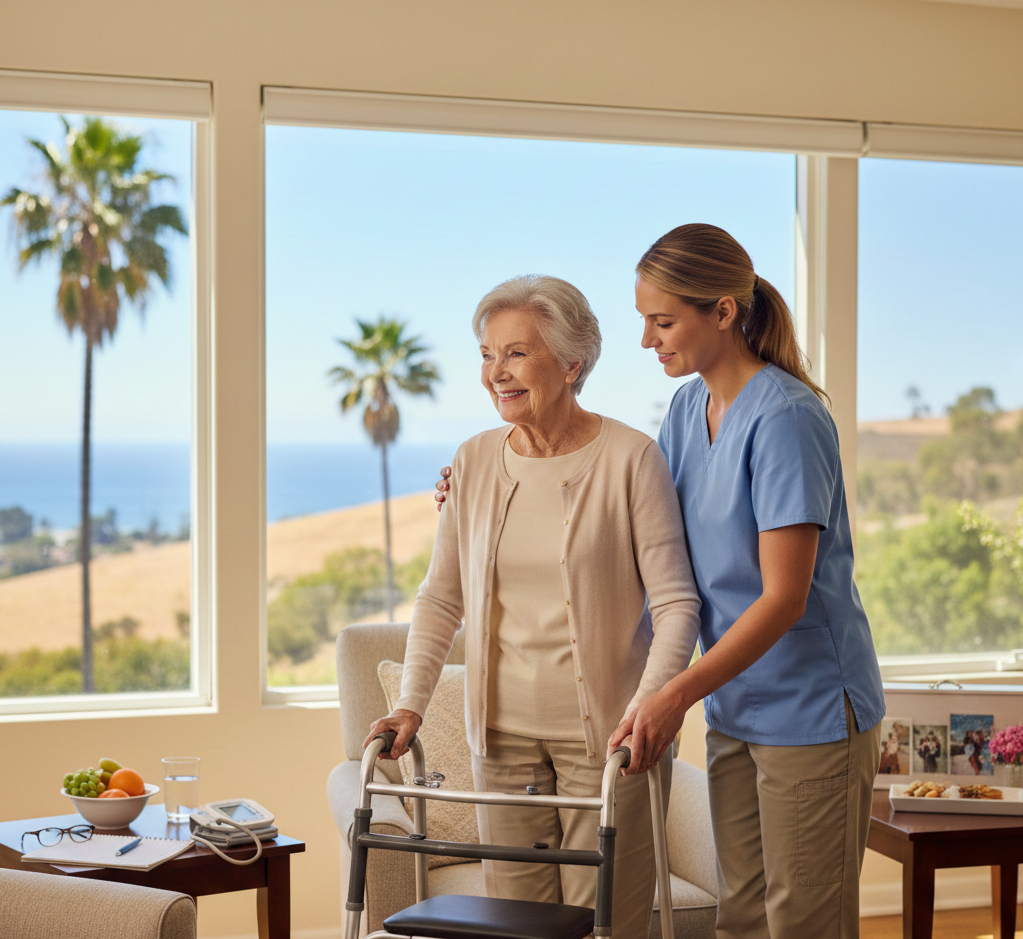
While many people use the terms "caregiver" and "home health aide" interchangeably, the role of a Home Health Aide (HHA) in California is distinct, regulated, and highly specialized. At Interim HealthCare, we believe that understanding these specific duties is essential for families making informed decisions about home care, dementia care, and long-term wellness.
In this guide, we will explore the California-specific scope of practice for HHAs, their medical and personal responsibilities, and how they differ from other types of in-home providers.
What is a Home Health Aide in California?
In California, a Home Health Aide (HHA) is a certified health professional who provides a mix of personal care and basic medical assistance. Unlike a general caregiver or Personal Care Aide (PCA), an HHA must complete a state-approved training program—typically 120 hours—and be certified by the California Department of Public Health (CDPH).
Because of this rigorous training, HHAs are authorized to perform certain clinical tasks under the supervision of a Registered Nurse (RN) or a Physical Therapist. They serve as the "eyes and ears" of the medical team, ensuring that a patient’s condition is monitored closely between doctor visits.
The Core Responsibilities of a California HHA
The duties of a home health aide are designed to support patients who are recovering from surgery, managing a chronic illness, or living with a disability. Their work generally falls into three main categories:
Vital Sign Monitoring and Medical Support
This is where HHAs differ most from standard home care aides. In California, HHAs are trained to:
Record Vital Signs: They regularly check and document pulse, temperature, respiration, and blood pressure.
Assist with Prescribed Exercises: If a patient is in physical therapy, an HHA can help them complete the exercises prescribed by their therapist.
Non-Sterile Wound Care: They can assist with basic dressing changes for healing wounds that do not require sterile procedures.
Skin Care: They monitor for "pressure sores" or skin breakdown, which is critical for patients with limited mobility.
Assistance with Activities of Daily Living (ADLs)
Maintaining personal hygiene is essential for both physical health and self-esteem. HHAs provide "hands-on" care, including:
Bathing and Grooming: Assisting with showers, sponge baths, hair care, and oral hygiene.
Safe Transfers: Helping patients move safely from a bed to a wheelchair or assisting with walking to prevent falls.
Toileting and Incontinence Care: Providing dignified assistance with restroom use or catheter bag maintenance (emptying only).
Nutritional and Environmental Support
An HHA ensures the home environment supports the patient’s recovery plan. This includes:
Meal Preparation: Cooking meals that adhere to specific therapeutic diets (e.g., low-sodium or diabetic-friendly diets).
Medication Reminders: While they cannot administer injections or "prescribe" meds, they assist with self-administration by reminding the patient and ensuring they follow the doctor’s schedule.
Light Housekeeping: Maintaining the patient’s immediate area, such as changing bed linens or doing the patient's laundry.
Specialized Support: Dementia Care and 24 Home Care
In California’s diverse care landscape, HHAs often play a pivotal role in high-need scenarios.
Specialized Dementia Care
Caring for someone with Alzheimer’s or other forms of memory loss requires more than just a helping hand; it requires a deep understanding of cognitive changes. HHAs in California often receive additional training in dementia care. They learn how to manage "sundowning" (increased confusion in the evening), prevent wandering, and use redirection techniques to ease anxiety. Because they are trained to spot subtle physical changes, they can often identify if a behavioral outburst is actually caused by a physical issue, like a urinary tract infection (UTI).
The Shift to 24 Home Care
For families dealing with advanced illness or high fall risks, intermittent visits may not be enough. In these cases, HHAs often work as part of a team providing 24 home care. Having a certified professional available around the clock ensures that even in the middle of the night, medical vitals can be checked, and safety protocols are strictly followed.
HHA vs. Personal Care Aide: What’s the Difference?
It is common for families to feel confused by the different titles. Here is the primary distinction in California:
Home Care Aides (Caregivers): These individuals are registered with the Department of Social Services. Their role is "custodial," meaning they focus on companionship and household help. They generally do not perform medical tasks like taking vitals.
Home Health Aides (HHA): These individuals are certified by the Department of Public Health. Their role is "clinical and personal," meaning they work under a medical plan of care and can perform basic health-related tasks.
If your loved one is recovering from a hospital stay or has a complex medical condition, an HHA is usually the appropriate level of care.
Why Choose an HHA for Your Loved One?
The primary benefit of a California Home Health Aide is the peace of mind that comes with professional oversight. Because they are supervised by a clinical manager or RN, their observations are funneled directly back to the medical team. This prevents "gaps" in care that often lead to hospital re-admissions.
Whether it is providing 24 home care after a major surgery or offering compassionate dementia care to a parent, HHAs are the backbone of the home health system. They provide the clinical safety of a facility with the emotional comfort of staying at home.
Getting Started in California with a Home Health Aide
If you believe your family would benefit from the expertise of a Home Health Aide, the process usually begins with a clinical assessment. A nurse will visit your home to determine the level of "skilled" versus "personal" care required and develop a schedule that meets your needs.
Is it time to bring professional medical support into your home? Contact your local Interim HealthCare office today for a free consultation. We can help you navigate California's regulations and find the right HHA for your family's unique situation.