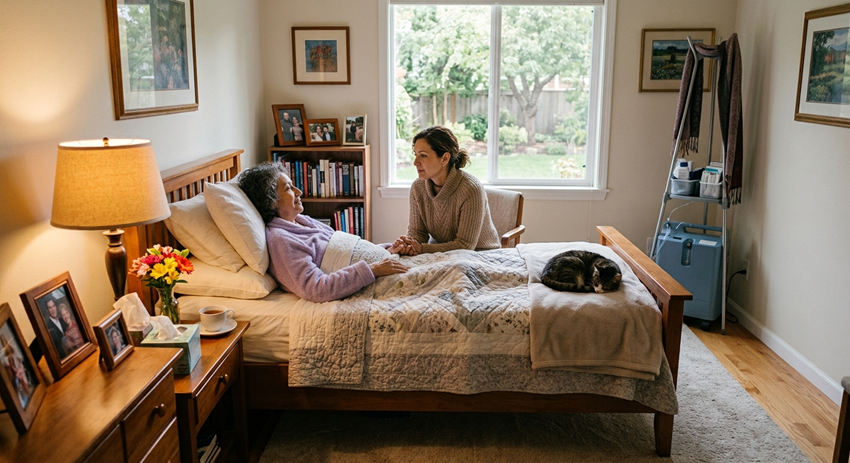
When transitioning to end-of-life care, preparing the physical space becomes an essential part of the journey. Transforming a standard bedroom into a peaceful retreat requires balancing specialized clinical needs with warmth, comfort, and dignity. A thoughtful approach ensures that medical professionals can deliver high-quality care while maintaining the serene feel of a personal sanctuary.
Understanding how to arrange and equip this room helps relieve anxiety for both the patient and family caregivers. With a few intentional adjustments, you can establish an optimal space that supports physical comfort and emotional peace.
Evaluating the Space and Room Placement
consider which room in the house will serve as the bedroom sanctuary. While keeping your loved one in their primary bedroom is often the first instinct, it may not always be the most practical choice.
When planning your at home hospice room setup, accessibility should be a top priority. A room located on the ground floor near a bathroom is often ideal. Ground-floor rooms eliminate the challenge of navigating stairs for the patient, visiting family members, and visiting healthcare professionals.
Look for a room that features good natural lighting and reasonable proximity to main family living areas. Your loved one should feel connected to the gentle flow of daily household life without feeling overwhelmed by noise or commotion.
Ensure the doorways leading into the room and surrounding hallways are wide enough to accommodate wheelchairs, walkers, and medical rolling carts. Clearing entryways early creates a seamless environment for everyone involved in caregiving.
Mastering the Layout for Clinical Care and Comfort
Arranging the layout thoughtfully transforms a standard room into an efficient, peaceful environment. The bed serves as the focal point of the room, so its placement is critical.
Position the bed so caregivers can access it easily from at least two or three sides. Placing the bed directly against a corner wall makes changing linens, assisting with hygiene, and repositioning the patient significantly harder for nurses and family members.
If possible, orient the bed so your loved one can look out a window. Natural light, views of blue skies, and sights of outdoors boost emotional well-being and help maintain regular sleep-wake cycles.
Keep walkways clear of decorative rugs, electrical cords, and excess furniture. This layout prevents tripping hazards and allows visiting professionals from Interim HealthCare to move freely while providing compassionate care.
Integrating Essential Medical Equipment Thoughtfully
Proper care requires specialized tools, but managing medical gear does not mean the room has to look like a clinical facility. Knowing how to incorporate hospice equipment at home while keeping the space cozy makes a huge difference in the overall atmosphere.
An adjustable hospital bed is usually the central piece of equipment required. These beds allow caregivers to raise the head and feet for feeding, breathing comfort, and pressure relief. You can make an adjustable bed feel less institutional by using soft, high-thread-count sheet sets in soothing pastel tones and layering comfortable quilts or blankets over top.
Oxygen concentrators, suction machines, and side tables are also common. To maintain a relaxing room, arrange small wooden screens or decorative room dividers to shield medical machinery from direct view when it is not in active use. Ensure all equipment remains ventilated and easily accessible for immediate clinical needs.
A dedicated rolling cart or nightstand keeps medical supplies neatly organized. Storing wipes, gloves, lotions, and medications inside drawers or decorative baskets keeps clutter at bay while keeping necessities right at hand.
Creating an Optimal Physical Environment
A truly peaceful sanctuary engages the senses in calming ways. Lighting, temperature control, sound management, and air quality all contribute to creating a restorative hospice care at home environment.
Soft and Adjustable Lighting
Bright overhead fluorescent lights can feel harsh and clinical. Instead, use ambient table lamps with warm-toned bulbs. Installing dimmer switches gives you control over light levels throughout the day and night. Sheer curtains let in gentle sunlight during daytime hours, while blackout drapes ensure restful sleep when needed.
Soundscapes and Audio Comfort
Background noise from televisions or busy streets can cause stress. Gentle background sound can have a deeply calming effect. Consider playing soft classical music, acoustic instrumental tracks, or natural sounds like gentle ocean waves or rain. White noise machines help buffer sudden household sounds that might startle a resting patient.
Temperature Control and Fresh Air
Maintaining a comfortable room temperature is vital, as patients in hospice care often experience changes in body temperature regulation. Keep light blankets nearby for quick adjustments. Opening windows briefly on pleasant days allows fresh air to circulate, lifting room energy and improving air quality.
Enhancing Emotional Comfort with Personal Touches
While managing physical needs is crucial, emotional comfort is equally important during end-of-life care. The room should reflect your loved one’s personality, history, and life journey.
Incorporate meaningful personal items throughout the space:
- Family photo frames placed within clear line of sight
- Favorite soft throw blankets and comfortable pillows from home
- Cherished artwork or inspirational wall decor
- A small diffuser with gentle lavender or chamomile essential oils
- Fresh flowers or low-maintenance indoor plants to bring nature inside
Having familiar personal belongings within view offers reassurance, reduces disorientation, and reminds your loved one of the deep love surrounding them.
Supporting Family Caregivers in the Space
A peaceful sanctuary should support the family members and caregivers who spend hours by their loved one's side. Caregiving can be physically and emotionally demanding, making comfortable seating essential.
Include a plush recliner or a cozy armchair with a soft blanket nearby. If space permits, a daybed or sleeper sofa allows family members to stay overnight comfortably.
Designate a small side table for caregivers to keep a water bottle, reading materials, phone chargers, and a journal. When caregivers feel comfortable, they can offer calm, unhurried support to their loved one.
Partnering with Professional Hospice Services
Creating the physical setup is only one half of the care equation. Having an experienced, compassionate healthcare team by your side ensures your loved one receives exceptional clinical management and pain relief in the room you have prepared.
At Interim HealthCare, our dedicated hospice teams work directly with families to guide room setup, manage equipment delivery, and provide ongoing clinical care. From skilled nursing visits and pain management to personal care assistance and emotional support, our compassionate professionals help you maintain a peaceful environment every step of the way.
If you are navigating end-of-life planning for a family member, you do not have to do it alone. Learn more about how our hospice care services can support your family at home, or contact your local Interim HealthCare office today to speak with a dedicated care team member.