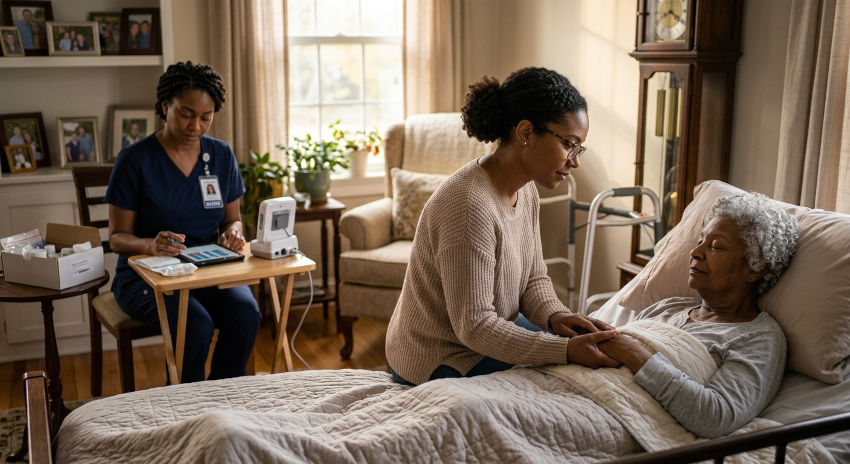
The transition to at-home hospice care creates a profound shift in daily life. It changes the family role in at home hospice care from overburdened medical manager back to loving companion. Understanding home hospice caregiving expectations allows family members to set aside clinical stress and focus on meaningful time together.
The Physical and Emotional Weight of Unassisted Caregiving
Long before formal hospice steps through the door, family members often carry an immense load behind closed doors. They act as nurses, schedulers, physical therapists, and housekeepers around the clock.
Research indicates that roughly 75% of hospice family caregivers experience heightened stress and anxiety due to the relentless demands of end-of-life care. Over time, managing pain medications and tracking vitals leads to severe physical fatigue and emotional burnout.
The constant vigilance required to monitor late-stage illness robs families of emotional presence. When every interaction centers around medication doses, mobility assistance, and symptom tracking, the precious space for quiet conversations, shared memories, and emotional closure begins to shrink.
How Hospice Shifts the Clinical Burden
A common misconception is that entering hospice means a family must hand over every aspect of daily life to outside strangers. In reality, hospice care at home support operates through a collaborative care team that takes full ownership of the clinical responsibility.
When hospice care begins, specialized healthcare professionals step in to manage clinical needs:
Dedicated hospice nurses conduct regular home visits to monitor condition changes, manage pain protocols, and adjust medications.
Medical social workers and hospice chaplains provide grief counseling, emotional guidance, and practical assistance with advance directives.
Hospice aides assist with personal care routines like bathing, dressing, and gentle skin care to preserve dignity.
Medical equipment teams deliver necessary items like hospital beds, oxygen concentrators, and specialized cushions directly to the house.
By placing clinical responsibility on trained professionals, families no longer have to second-guess medical decisions or navigate complex health systems alone. You can explore how Interim HealthCare hospice services deliver professional clinical support directly to your home.
Redefining Home Hospice Caregiving Expectations
When professional clinicians manage pain and medical needs, the daily expectations on family members shift completely. Families transition from acting as primary medical providers to serving as the emotional anchor for their loved one.
From Medical Manager to Loving Companion
Prior to hospice, a daughter might spend her morning sorting pills, calling pharmacies, and attempting risky transfers from bed to chair. Once the hospice team establishes a structured plan, that same daughter can sit by the bedside, hold her parent's hand, read favorite books, or listen to music together.
From Unplanned Crisis to 24/7 Professional Guidance
Terminal illnesses rarely follow a neat 9-to-5 schedule. Symptoms can flare up in the middle of the night, leaving family caregivers panicked and uncertain about whether to call emergency services.
Hospice programs offer round-the-clock access to on-call nurses. A quick call provides immediate guidance, medication adjustments, or an urgent home visit, giving families continuous peace of mind.
From Physical Strain to Supported Daily Routines
Lifting, repositioning, and bathing a bedbound loved one takes a severe physical toll. Hospice aides handle these heavy physical tasks during scheduled visits, preserving the family member's physical health and preventing burnout.
For families seeking supplemental support between hospice nurse visits, pairing hospice care with private duty care options helps ensure continuous assistance with daily living routines. Discover how Interim HealthCare personal care and support provides additional help with non-medical daily tasks.
The Emotional Benefit of Reclaiming Your True Role
The most significant benefit of bringing hospice into the home is the emotional freedom it gives back to the family. When you are no longer consumed by clinical monitoring, you can focus on being a spouse, child, sibling, or friend.
Unresolved family dynamics often find peace during this period. When professional staff oversee pain control, family members have the time and mental energy to say important things, offer forgiveness, and express love without distraction.
Hospice social workers also guide families through the emotional stages of anticipatory grief. They offer practical coping strategies and help facilitate open conversations about end-of-life preferences.
How Supplemental Home Care Fills the Gaps
While Medicare and private insurance cover standard hospice visits, hospice personnel are not in the home 24 hours a day. Nurses and aides visit for specific time blocks to complete clinical tasks and check symptoms.
Many families find that adding private duty home care alongside hospice creates the ultimate safety net. Supplemental home caregivers can stay for extended shifts to help with:
Preparing light meals and hydration encouraging nutrition as tolerated.
Running errands, picking up groceries, and handling light household chores.
Providing respite care so primary family caregivers can sleep, work, or take a necessary break.
Offering continuous companionship and safety monitoring while family members rest.
Combining comprehensive hospice care with dedicated private home care helps maintain a calm, clean, and organized environment. You can learn more about balancing care needs by reading about Interim HealthCare home health solutions.
Navigating the Transition to At-Home Hospice Care
Accepting hospice support is not about giving up hope. It is about choosing comfort, dignity, and quality of life for your loved one's remaining time.
If you notice that caregiving demands are overwhelming your family, consider taking these actionable steps:
Request a hospice consultation from your loved one's primary physician or specialist to evaluate eligibility.
Discuss your family's daily challenges openly so the hospice team can tailor a care plan to your specific needs.
Review your personal schedule and establish boundaries so you can take regular breaks without feeling guilty.
Reach out to local home care agencies to explore supplemental assistance for overnight hours or busy daytime routines.
You do not have to navigate this delicate journey entirely on your own. Professional support ensures your loved one receives expert medical care while giving you the space to cherish every remaining moment.
To learn how personalized end-of-life support can assist your family, reach out to your a locally owned Interim HealthCare office today!
Finding Peace is Interim HealthCare’s unique approach to hospice care, meeting patients and families where they are and tailoring support throughout their journey. Hospice is often misunderstood as care only for the final days of life. Through Finding Peace, patients and families gain a better understanding of the care and support hospice can provide, giving them the opportunity to benefit from services earlier and for a longer period of time. Our phased approach cares for the mind, body, spirit, and family, helping create a more meaningful and supportive hospice experience. Click here to learn more: