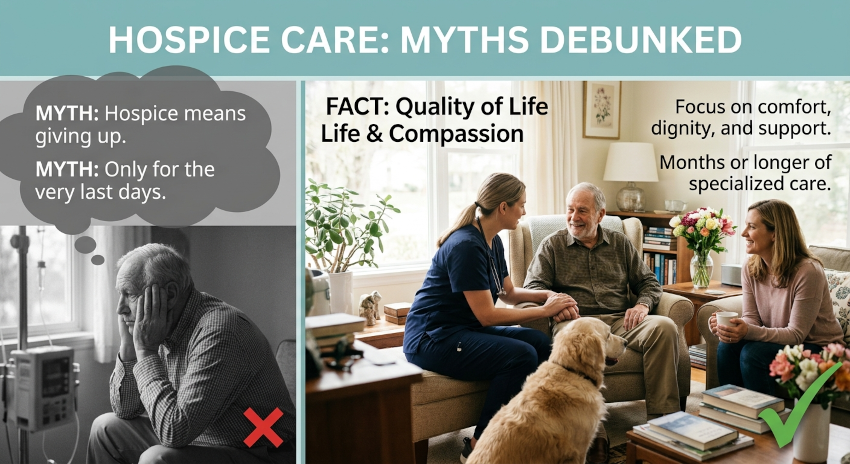
This hesitation rarely stems from a lack of love. Instead, it is usually fueled by persistent at home hospice care myths. Misinformation about what this care entails can lead families to wait until the final hours to reach out, missing out on months of valuable guidance, physical relief, and emotional connection.
By replacing fear with hospice care at home facts, families can make informed decisions that honor their loved one's preferences without sacrificing safety or clinical oversight.
Myth 1: Choosing Home Hospice Means Giving Up on Proper Medical Oversight
One of the most widespread fears is that transitioning to home-based end-of-life care means abandoning real medical treatment. Family members often worry that leaving a hospital setting means sacrificing professional monitoring, leading to unmanaged pain or emergency situations.
The Reality
Receiving hospice care at home involves a comprehensive, highly coordinated medical team designed to bring specialized clinical expertise directly to your doorstep. Hospice care does not mean stopping care; it shifts the goal from curative treatment to intensive comfort and quality of life.
When you partner with a trusted provider like Interim HealthCare, your loved one receives care overseen by a dedicated interdisciplinary team. This group includes:
- Registered Nurses (RNs) and Nurse Practitioners who specialize in complex symptom management, administer palliative medications, and adjust care plans as needs evolve.
- Hospice Physicians who collaborate with your family doctor to manage physical comfort and oversee clinical decisions.
- Hospice Aides who provide essential personal care services, assisting with bathing, dressing, and daily hygiene to maintain dignity.
Rather than lacking oversight, home hospice provides a clinical focus tailored precisely to the patient's individual comfort needs.
Myth 2: Families Are Left Entirely on Their Own Overnight
A major anxiety for family caregivers is the thought of being left stranded during a late-night crisis. The idea of handling a sudden surge in pain, breathing difficulty, or emotional distress alone at 2:00 AM keeps many families from electing in-home support.
The Reality
You are never expected to become a doctor or a nurse overnight, nor are you left to navigate difficult moments by yourself. In-home care services are designed specifically to support family caregivers, not replace professional care with unpaid family labor.
Hospice providers maintain 24/7 on-call coverage. If an unexpected symptom or worry arises in the middle of the night, a qualified nurse is only a phone call away to guide you, adjust medications, or make an urgent home visit if necessary.
Additionally, trained team members provide education so family members feel confident in their daily caregiving roles. For times when family members need a break to rest and recharge, structured respite care options allow loved ones to take a step back knowing professional caregivers are managing the care process.
If you want to learn more about how our clinical team supports families around the clock, explore our detailed guide on the Interim HealthCare Hospice Care Team at Home.
Myth 3: Home Hospice Is Only for the Final Few Hours or Days of Life
Many people hold the misconception that hospice is a last resort to call in only when death is imminent within hours or days. This myth leads to delayed enrollment, depriving patients and their families of support when it could offer the greatest benefit.
The Reality
Hospice care is designed to support patients for six months or longer, depending on the progression of the terminal illness. Entering care early in the diagnosis opens the door to holistic support that significantly improves quality of life for both the patient and their family.
Early enrollment allows time for:
- Effective Pain and Symptom Control: Establishing a baseline early prevents sudden pain crises and manages symptoms before they become severe.
- Emotional and Spiritual Guidance: Dedicated chaplains, social workers, and counselors work with patients and family members to process feelings, address anxiety, and find peace.
- Meaningful Connections: When pain and anxiety are properly managed early, patients often experience periods of renewed energy and clarity, enabling them to enjoy meaningful time with family.
- Grief and Bereavement Support: Social workers and bereavement specialists support the family both during the illness and for an extended period afterward.
To understand how early support transforms the end-of-life journey, read our full article on the benefits of choosing in-home hospice.
Myth 4: Hospice Requires Giving Up Personal Independence and Home Routines
Families sometimes worry that choosing in-home end-of-life care will transform a warm home into a cold, clinical facility filled with intrusive machinery and rigid schedules.
The Reality
In-home care is structured around preserving normalcy, autonomy, and personal dignity. Patients remain in control of their day-to-day routines. They decide when to wake up, what to eat within their dietary needs, and when to spend time with visitors or pets.
Medical equipment and personal care items are brought in quietly to support comfort, not to take over the living space. Care plans are built around the patient's existing schedule, respecting the sanctuary of the home while delivering essential nursing care.
Our philosophy at Interim HealthCare centers on our HomeLife Enrichment approach, which focuses on caring for the mind, body, spirit, and family together. We honor each person's unique life story and tailor every visit to foster moments of joy, peace, and personal comfort.
Making the Right Choice for Your Family
Choosing the right path during a challenging health journey requires reliable information and compassionate guidance. When you look past the common myths, it becomes clear that in-home care offers professional medical expertise, around-the-clock peace of mind, and the unmatched warmth of familiar surroundings.
Finding Peace is Interim HealthCare’s unique approach to hospice care, meeting patients and families where they are and tailoring support throughout their journey. Hospice is often misunderstood as care only for the final days of life. Through Finding Peace, patients and families gain a better understanding of the care and support hospice can provide, giving them the opportunity to benefit from services earlier and for a longer period of time. Our phased approach cares for the mind, body, spirit, and family, helping create a more meaningful and supportive hospice experience. Click here to learn more:
If you or a loved one are facing a advanced illness, starting the conversation early helps ensure your goals and wishes are fully respected.
To learn more about how our compassionate hospice teams can support your family in the comfort of your own home, reach out to your local branch today to speak with a care coordinator.