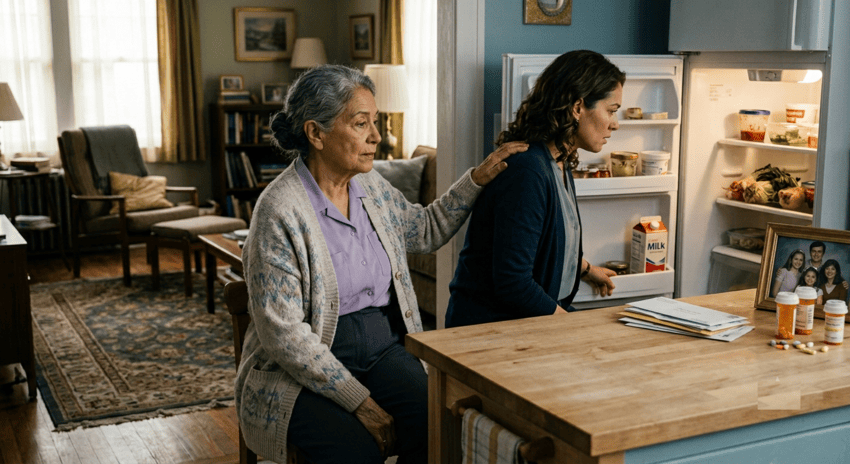
Waiting for a crisis to happen often means making stressful, life-altering decisions under extreme pressure. Fortunately, you can prevent these emergencies by looking for subtle clues during your routine visits. By identifying the signs an elderly parent needs help early on, you can introduce supportive solutions before their safety is compromised. Rather than taking away their autonomy, proactively arranging for home care assistance for elderly relatives serves as a vital preventative measure that allows them to remain safely and comfortably in their own homes.
Here is how to look beyond the surface and use everyday checks, including the revealing "Fridge Test," to evaluate whether your parent could benefit from extra support.
1. The "Fridge Test"
One of the simplest and most telling assessments you can perform during a visit is opening your parent’s refrigerator. The contents of the kitchen offer a direct window into their nutritional intake, cognitive health, and physical capabilities. When you look inside, check for multiples of the same item, which can indicate memory lapses. You might find three cartons of milk or several jars of the same condiment because they forgot what they already had when they went shopping.
Look closely at expiration dates. A refrigerator filled with expired, spoiled, or moldy food suggests that your parent is either forgetting to eat, losing their sense of taste or smell, or finding it physically too difficult to prepare fresh meals. Conversely, a completely empty refrigerator may mean they are unable to navigate the grocery store or manage online ordering. Nutritional deficiencies can accelerate physical weakness and cognitive decline, making regular kitchen checks an essential habit.
2. Neglected Housekeeping and Piles of Clutter
Take a look around the living space. If your parent has always maintained a clean and tidy home, a sudden or gradual shift toward untidiness is a major red flag. Look for thick layers of dust, unvacuumed carpets, piles of dirty dishes in the sink, or mountains of laundry. Bathrooms that are neglected or trash cans overflowing with garbage are clear indications that physical chores have become overwhelming.
Pay attention to the mail as well. Stacks of unopened mail, unread newspapers, or past-due utility bills scattered on tables can indicate that managing household administrative tasks has become too complex or exhausting for them. When physical stamina or cognitive clarity declines, basic housekeeping is often the first thing to be abandoned.
3. Changes in Personal Hygiene and Appearance
When you hug or sit close to your parent, note their personal hygiene and physical appearance. Subtle changes in grooming can be an early indicator of physical limitations or emotional struggles like depression. You might notice an unfamiliar body odor, unwashed hair, or unbrushed teeth. These signs often point to a fear of slipping in the shower, difficulty stepping over a high bathtub edge, or trouble remembering the steps of a daily routine.
Look at their clothing as well. Are they wearing the same outfit multiple days in a row? Are their clothes stained, torn, or inappropriate for the current season? Difficulty managing buttons, zippers, or shoelaces due to arthritis can cause seniors to wear the easiest clothes available, even if they are dirty or mismatched.
4. Unexplained Physical Changes and Unsteady Movement
Physical decline can happen quietly. Watch your parent as they move around the house. Do they experience noticeable difficulty standing up from a favorite chair or a low sofa? Do they steady themselves against walls, furniture, or your arm while walking? This behavior, known as "furniture walking," is a classic sign of balance instability and muscle weakness, which dramatically increases the risk of a severe fall.
Important Safety Statistic: According to research highlighted by the Centers for Disease Control and Prevention (CDC), millions of older people, specifically more than one out of four Americans aged 65 and older, fall each year. Taking preventative steps early can significantly lower these risks.
Pay attention to their weight as well. Visible weight loss can indicate that cooking has become too difficult, that they are skipping meals, or that an underlying medical issue needs professional attention. Conversely, sudden weight gain could indicate poor nutrition, fluid retention, or a struggle to manage a health condition properly.
5. Unexplained Dents on the Car or Decreased Social Outings
If your parent is still driving, take a walk around their vehicle. Look for new scratches, scrapes, or dents on the bumpers and side panels. Minor accidents with garage doors, curbs, or shopping carts often occur when a senior experiences a decline in reflex speed, peripheral vision, or spatial awareness. Driving challenges pose a direct threat to their safety and the safety of others on the road.
If they have stopped driving or have given up their car keys, observe how it affects their lifestyle. Seniors who lose their mobility often begin isolating themselves. If your parent is skipping their usual social groups, religious services, or visits with friends, this withdrawal can lead to loneliness and rapid cognitive decline.
6. Changes in Mood, Memory, and Cognitive Function
It is natural to experience occasional forgetfulness with age, but significant behavioral changes warrant closer attention. Notice if your parent repeats the same questions within a short conversation, misplaces important items constantly, or struggles to find common words. Deepening confusion, sudden bursts of irritability, or uncharacteristic mood swings can point to underlying cognitive changes.
A parent who was once highly social and energetic might become passive, quiet, or easily overwhelmed in lively group settings. They may also show a lack of interest in hobbies they used to love, which can be a sign of cognitive fatigue or emotional distress.
7. Poor Medication Management
Managing multiple prescriptions requires a high level of organization and memory. Take a look at where your parent stores their medications. Are pill bottles scattered across different rooms? Are pill organizers left completely full or entirely empty on days they should be used? Missing critical doses or accidentally double-dosing on medications can cause serious adverse medical events that land seniors in the emergency room.
How Non-Medical Home Care Bridges the Gap
Discovering these hidden signs can feel overwhelming, but it does not mean your parent needs to leave their cherished home for an assisted living facility. Instead, introducing non medical home care services is an effective way to bridge the gap between complete independence and total care. This type of supportive care focuses on assisting seniors with the tasks that have become challenging, ensuring they stay safe while retaining their dignity.
Professional caregivers provide essential activities of daily living support, which includes helping with personal care, bathing, and dressing. They also handle light housekeeping, laundry, and grocery shopping, and they can prepare nutritious, fresh meals so you never have to worry about the results of a "Fridge Test" again. Additionally, these services offer valuable companionship, helping seniors stay socially engaged and providing reliable transportation to medical appointments and social events.
Preserving Independence Through Preventative Care
It is common for seniors to resist the idea of help because they view it as a loss of control or a step toward moving away from home. However, framing elderly care at home as a preventative measure can change their perspective entirely. Getting help with challenging tasks frees up their energy, allowing them to focus on the things they truly enjoy doing rather than exhausting themselves with chores.
By addressing these subtle needs early, you reduce the likelihood of a crisis and ensure your parent can age in place safely. If you have noticed any of these seven hidden signs in your parent's home, reach out to an Interim HealthCare office today to discuss how personalized home care assistance for elderly relatives can bring peace of mind to your entire family.