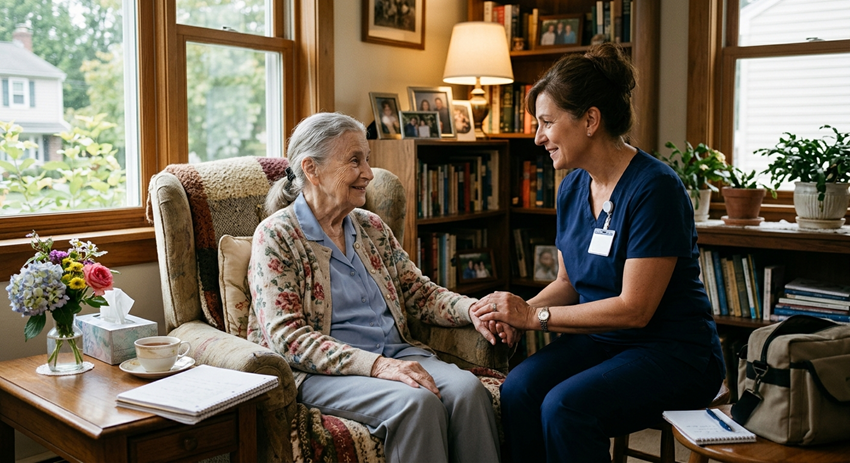
Understanding the rhythm of this care helps set realistic expectations and relieves administrative anxiety. According to national healthcare industry reports, more than 50 percent of all hospice care days in the United States take place directly within the patient personal residence. Exploring a standard week illustrates how professional medical oversight, personal hygiene assistance, emotional support, and emergency responsiveness seamlessly blend into everyday family life.
Monday: Setting the Clinical Foundation
The week often begins with a planned visit from the primary hospice registered nurse. This visit establishes the clinical clinical baseline for the coming days and ensures that symptom management plans remain on track.
The nurse arrives during a pre-arranged morning window, bringing medical supplies and reviewing the patient current health status. They check vital signs, assess pain levels, evaluate lung sound clarity, and inspect skin integrity. Medication administration logs are carefully cross-referenced to confirm that pain management protocols remain effective and free of uncomfortable side effects.
Rather than a rushed clinical assessment, this visit provides dedicated time for family education. The nurse reviews how to administer PRN, or as-needed, medications for breakthrough pain or anxiety. Before leaving, the nurse updates the individualized care plan and confirms the rest of the at home hospice care schedule for the week.
Tuesday: Personal Care and Hygiene Support
Tuesday introduces a vital member of the hospice team, the hospice aide or certified nursing assistant. Physical tasks such as bathing, shampooing, and changing bed linens can place significant physical and emotional strain on family caregivers. The arrival of an aide transforms this daily struggle into a dignified, comforting experience.
The hospice aide handles personal care tasks with gentleness and clinical skill. They assist the patient with a bed bath or shower, perform delicate oral care, apply moisturizing lotions to sensitive skin, and assist with fresh clothing changes.
While the aide focuses on hygiene, family members receive a crucial opportunity to step back, rest, or attend to personal needs. These scheduled visits often occur two to three times per week, establishing a predictable cadence for personal grooming and restful comfort.
Wednesday: Interdisciplinary Emotional and Social Support
By mid-week, the care focus expands beyond physical health to address emotional, practical, and social dynamics. A hospice social worker visits the residence to sit down with both the patient and family members.
Social worker visits address a wide variety of non-clinical needs. They offer empathetic counseling to process grief, facilitate family discussions regarding care preferences, and assist with practical paperwork such as advance directives or healthcare proxy documentation. They also connect families with community resources, volunteer support programs, or temporary respite care options.
For many families, having a dedicated professional to navigate emotional stress brings immense relief. The social worker ensures that the emotional well-being of the primary caregiver is given as much priority as the comfort of the patient.
Thursday: Spiritual Care and Volunteer Companionship
Spiritual care is a core component of holistic end-of-life support, provided always according to the patient and family personal beliefs. On Thursday afternoon, a hospice chaplain may visit the home to offer spiritual comfort, prayer, or simple reflective conversation.
Chaplains are trained to support diverse faith backgrounds as well as non-religious spiritual views. Their presence offers a quiet, unhurried space for patients to reflect on their life journey, resolve personal anxieties, or find spiritual peace.
Depending on the family preferences, a trained hospice volunteer might also visit on Thursday. Volunteers provide friendly companionship, read books aloud, play favorite music, or sit quietly with the patient so the primary family caregiver can run errands or take a short mental break.
Friday: Weekend Preparation and Supply Audits
As the traditional workweek comes to a close, the focus shifts to preparing the home for the weekend. A nurse or clinical coordinator conducts a thorough inventory audit during their Friday check-in.
The team verifies that the home has an ample supply of prescription medications, medical equipment, oxygen tanks, incontinence supplies, and wound care dressings to last through Sunday. Ordering supplies proactively eliminates late night panics over running out of essential items.
The nurse reviews the emergency contact protocols with the family once more. They confirm that the primary caregiver knows exactly which phone numbers to call if new symptoms arise over the weekend, ensuring complete peace of mind as Friday transitions into Saturday.
Saturday and Sunday: Family Time and On-Call Security
Weekends in a home care routine are intentionally structured to minimize medical disruptions, giving families quiet, unstructured time to connect, rest, and create meaningful memories together. While routine home visits are generally lighter over the weekend, professional medical support never pauses.
Behind the scenes, the agency operates a continuous, 24/7 on-call service staffed by experienced hospice nurses. If a patient experiences sudden pain, shortness of breath, or agitation at two o'clock on a Sunday morning, the family does not call emergency services or travel to a hospital emergency room.
Instead, the caregiver calls the dedicated hospice line. An on-call nurse responds immediately to provide phone guidance or dispatch a clinician directly to the home for an urgent, middle-of-the-night visit. This continuous safety net guarantees that acute symptom changes are addressed promptly in the comfort of the residence.
Establishing a Comforting Routine for Your Family
A typical week of in home hospice visits balances expert clinical oversight with maximum personal privacy. Rather than taking over the household, the hospice team works alongside the family, adjusting visit frequencies based on changing physical needs.
Establishing a predictable hospice care at home routine allows families to step away from the stressful role of a full time medical manager and return to what matters most, being a loving daughter, son, spouse, or friend. The combined expertise of nurses, aides, social workers, and chaplains creates a stable environment centered entirely on dignity, relief, and peace.
If your family is navigating a complex terminal diagnosis and considering home-based comfort care, you do not have to walk this path alone. Contact Interim HealthCare today to speak with a compassionate at home hospice care coordinator and learn how our dedicated hospice teams can support your family in the comfort of home.